
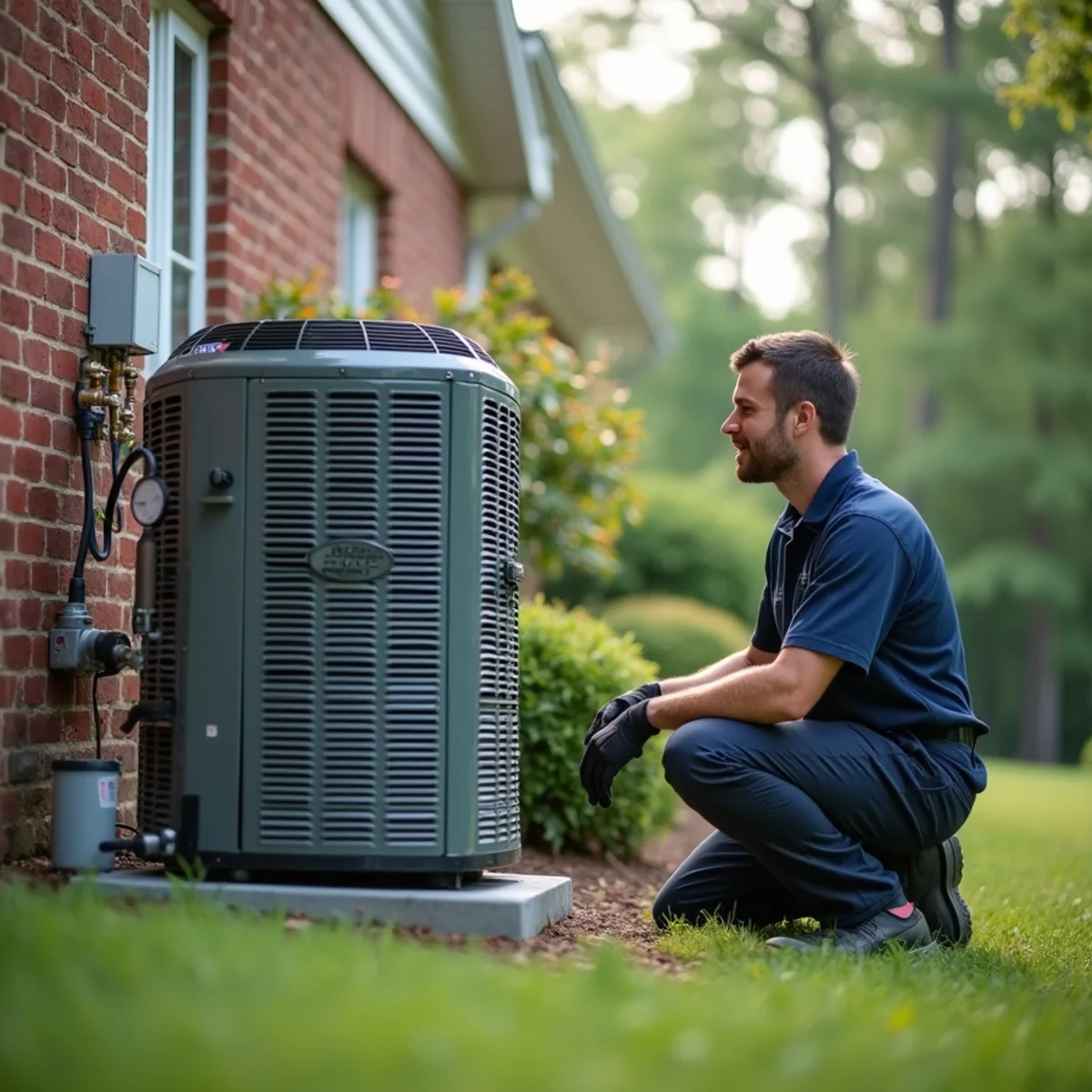
By the Littleton Premier Heating & Air team · Updated
AC repair in Matthews, NC starts with a live person on the phone, any hour. Call (321) 478-0693 and we send the nearest available licensed HVAC technician to measure what the system is doing, explain the fault in plain terms and put the repair price in writing before any work starts. Most summer calls here trace back to a failed capacitor or contactor, a refrigerant leak, an iced evaporator coil or a clogged condensate drain.
Matthews grew from about 1,600 people in 1980 to more than 29,000 by 2020, so most houses in Sardis Plantation, Brightmoor, Matthews Plantation and Hampton Green went up between 1985 and 2005. Many of them are on their second or third outdoor unit, usually with an air handler in the attic for the upstairs and another in the crawl space or a closet for the main floor. If yours just went quiet, our checklist for an AC that stopped working covers the safe checks first. (This page is about central air in homes; a car's air conditioning is a job for an auto shop.)
AC problems we fix in Matthews homes
Most no-cool calls in Matthews fall into a few patterns, each confirmed with measurements before any part is named.
| What you notice | Usual causes | Safe for you to check |
|---|---|---|
| Warm or barely cool air | Refrigerant leak, failed capacitor, dirty outdoor coil | Filter; is the outdoor fan turning? |
| Outdoor unit hums or clicks, will not start | Weak capacitor, pitted contactor, seized fan motor | Thermostat on Cool; breaker reset once |
| Ice on the copper line or indoor coil | Packed filter, slow blower, low charge | Switch to Off to thaw; change the filter |
| Water in the attic pan or a ceiling stain | Clogged condensate line, rusted pan, tripped float switch | Turn the system off |
| Runs nonstop, house feels damp | Leaky crawl space or attic ducts, oversized unit | Closed or blocked registers |
| Breaker trips when the AC starts | Shorted compressor, failing capacitor, loose wiring | Reset once only |
Stop the system right away for ice on the coil (running it frozen can damage the compressor), water in the secondary pan, or a breaker that trips twice. A buzzing outdoor unit with a still fan blade or a burning electrical smell also means switching it off and calling.
AC running but not cooling: capacitors, contactors, refrigerant leaks and frozen coils
When the fan blows but the air is not cold, either the compressor is not running (electrical) or it runs but cannot move heat (refrigerant or airflow). A meter and gauges separate the two in minutes.
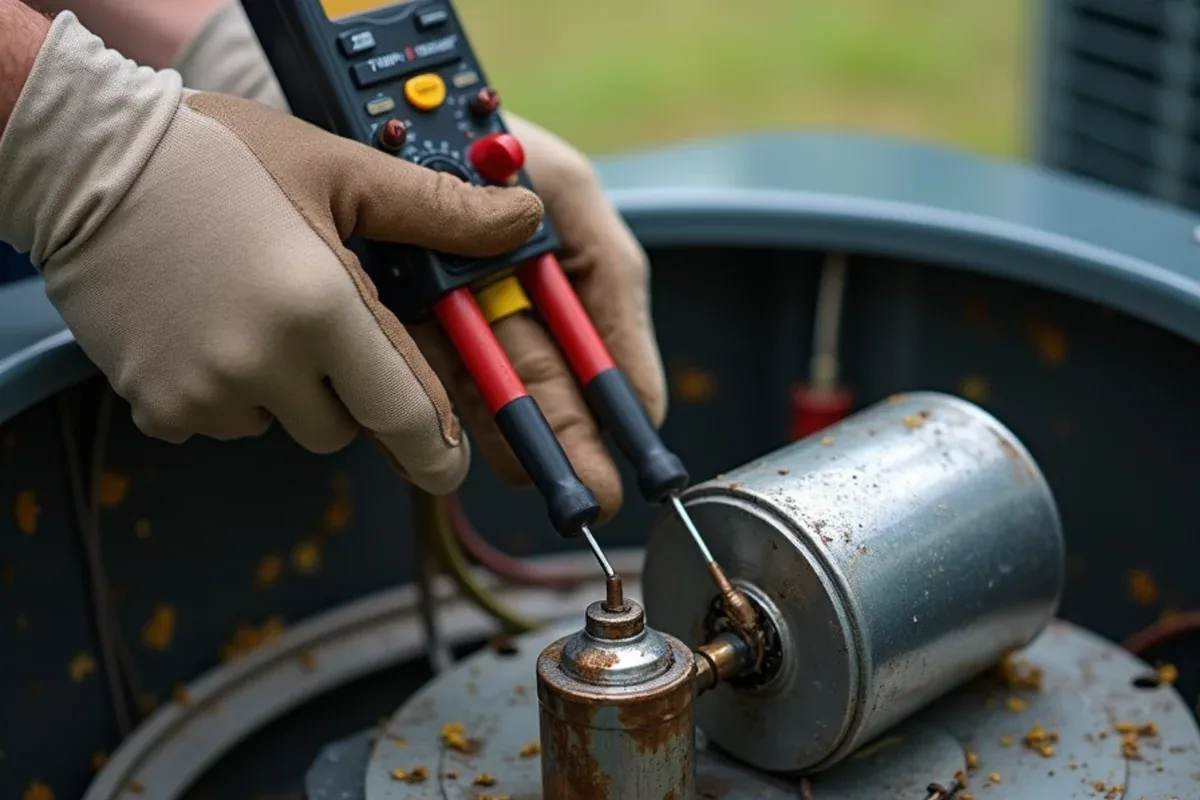
- Run capacitors start the compressor and condenser fan motor and keep them turning. Long July runtimes and afternoon sun bake them, so they fail in August far more than in May. Capacitor replacement is one of the most common AC repairs in Matthews, and the part is tested against its rating, not judged by a bulged top.
- Contactors switch the outdoor unit on; their contacts pit and burn with years of cycling.
- Refrigerant leaks show up as cooling that weakens week by week. Common leak points are brazed joints, Schrader valves, line sets rubbing a crawl space vent and pinholes in older copper evaporator coils.
- Frozen evaporator coils come from restricted airflow (a packed filter or failing blower) or low charge. Thawing the ice without fixing the cause brings it back within a day.
Safe checks only. Change a dirty filter, confirm the thermostat is on Cool and reset a tripped breaker once. Leave the outdoor panel closed: a capacitor holds a charge after the power is off, and the contactor carries 240 volts. Refrigerant work legally requires EPA Section 608 certification.
If the equipment tests healthy and a few rooms still run warm, the cause is often in the ducts rather than the AC. Ductwork repair and humidity control covers sagging crawl space runs and leaky attic ducts.
Clogged condensate drains and water leaking from an attic air handler
On a muggy July day an air conditioner can pull several gallons of water out of the air. It drips off the evaporator coil into a pan and leaves through a PVC condensate line, until algae, dust and pollen narrow the line and the pan overflows.
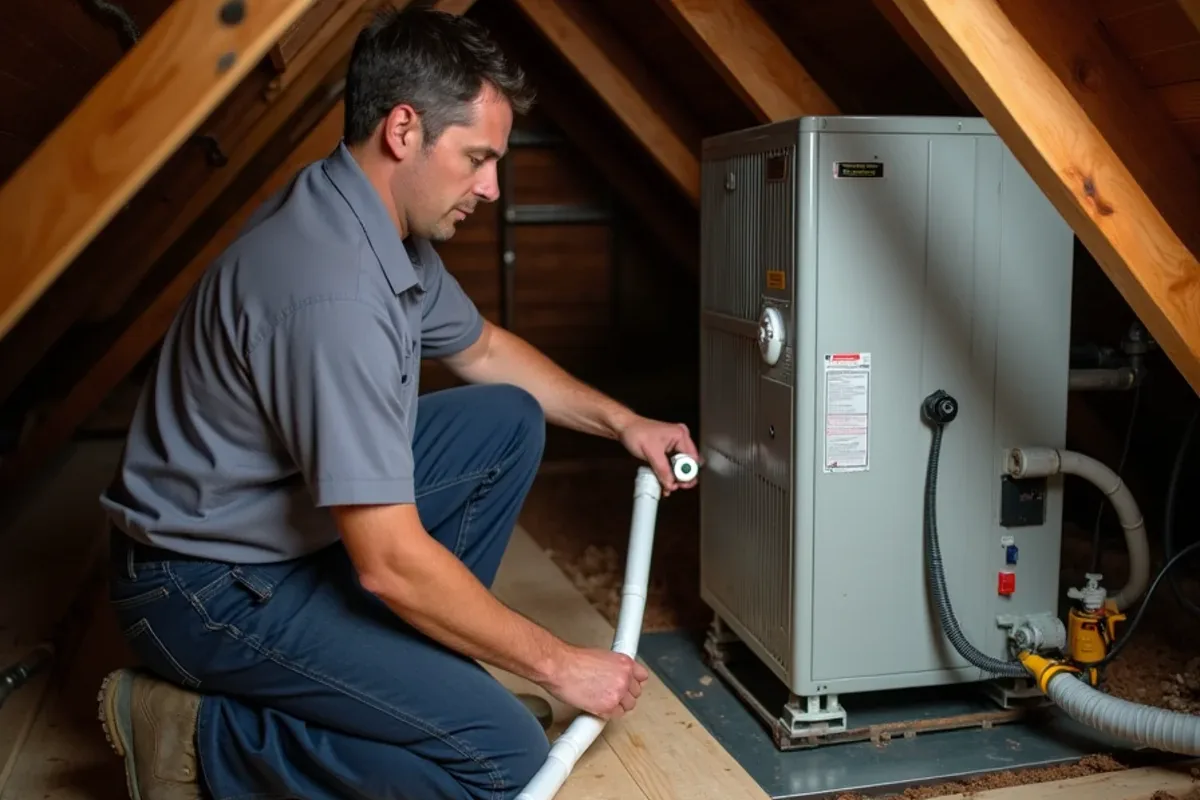
In a two-story Matthews home the upstairs air handler often sits in the attic above a bedroom. A proper install has a secondary pan or a float switch that shuts the system off before water reaches the ceiling; older ones may have a rusted pan or a float switch that was never wired in.
If the AC shuts off while the thermostat calls for cooling, a float switch may have tripped: do not bypass it. Water dripping from a pipe over a window means the primary line is clogged, and a spreading ceiling stain means turning the system off now. The repair is usually a line flush plus a new pan or float switch where needed.
Thermostat and control problems: blank screens, wrong modes and smart thermostat wiring
Some no-cool calls never reach the condenser. A thermostat with dead batteries, a heat pump thermostat set to the wrong changeover, or a smart thermostat installed without a common wire can leave a healthy system sitting idle while the house warms up. The technician checks the low-voltage side first because it is quick to test and easy to miss.
- Blank or flickering screen: on a hardwired thermostat this usually means lost 24-volt power, often from a tripped float switch in the attic or a blown fuse on the air handler board after a storm.
- "Cool on" but nothing happens: many systems hold a delay of a few minutes after a setting change to protect the compressor. Wait it out before calling.
- Heating when set to cool: on a heat pump, the thermostat tells the reversing valve which way to run. A wrong setting after a thermostat swap, or a failing valve coil, sends warm air in July.
- Smart thermostats that drop offline: many need a common (C) wire. Without one they steal power and reboot, which can short-cycle the outdoor unit.
- Thermostat in a hot spot: a sunny wall or a spot near a lamp or the kitchen keeps the system running long after the rest of the house is cold.
Should you turn the AC off when it is not cooling?
Yes, in most cases. If the outdoor unit hums without the fan spinning, you hear grinding or smell burning, or you see ice on the large copper line, switch the thermostat to Off. Running a strained compressor or a frozen coil turns a capacitor or airflow problem into a compressor problem. A frozen coil needs several hours to thaw completely; setting the fan to On speeds that up, and a towel under the air handler catches the melt. If it ices again after a fresh start, the cause is airflow or refrigerant, and the 24/7 emergency HVAC repair line is the next call.
Why Piedmont heat and humidity wear out air conditioners faster
Matthews summers are long and wet. Highs sit near 90°F for weeks, heat waves reach the mid-90s, and the AC spends much of its effort drying the air. Long, continuous run cycles from June through September are exactly what wear out capacitors, contactors and compressors.
- Pine pollen in late March and April: it coats outdoor coil fins and loads filters right before cooling season.
- Hot attics: every leaky duct joint around the upstairs air handler dumps cooled air where it does nothing.
- Damp crawl spaces: red clay holds water, so ducts under the house sweat, rust and sag, and leaky returns pull in humid air.
- Oversized replacements: a unit sized by square footage instead of an ACCA Manual J load calculation shuts off before it removes moisture, leaving the house cool but clammy.
Bonus rooms over garages and upstairs bedrooms that never catch up are often a duct or insulation problem rather than an AC fault. Our post on why the upstairs runs hot in a two-story home explains what to look at first.
R-22 and R-410A: what a refrigerant leak means for a 1990s or 2000s system
Your refrigerant depends on when the system was installed. Most residential systems installed before 2010, including any original 1990s unit still running in a Matthews subdivision, were built for R-22.
| Refrigerant | Typical install era | Supply today | What a leak usually means |
|---|---|---|---|
| R-22 | Before 2010 | Production and import ended January 1, 2020 | Small leak may be worth fixing; leaking coil usually means replacement |
| R-410A | About 2010 to early 2020s | Serviceable; supply stepping down under the EPA AIM Act | Usually worth repairing on a younger system |
| R-454B or R-32 | New systems now | Current refrigerants for new split systems | Repaired like any leak |
An AC never uses up refrigerant, so low charge means a leak, and topping off without finding it is a patch. Real refrigerant leak repair means locating the leak, fixing it, pulling a deep vacuum and weighing in the correct charge.
For R-22 owners it comes down to where the leak is and how tired everything else is. Our guide to repairing or replacing a 15-year-old HVAC system walks through it with Matthews-area homes in mind.
What an AC repair visit looks like, from call to cool air
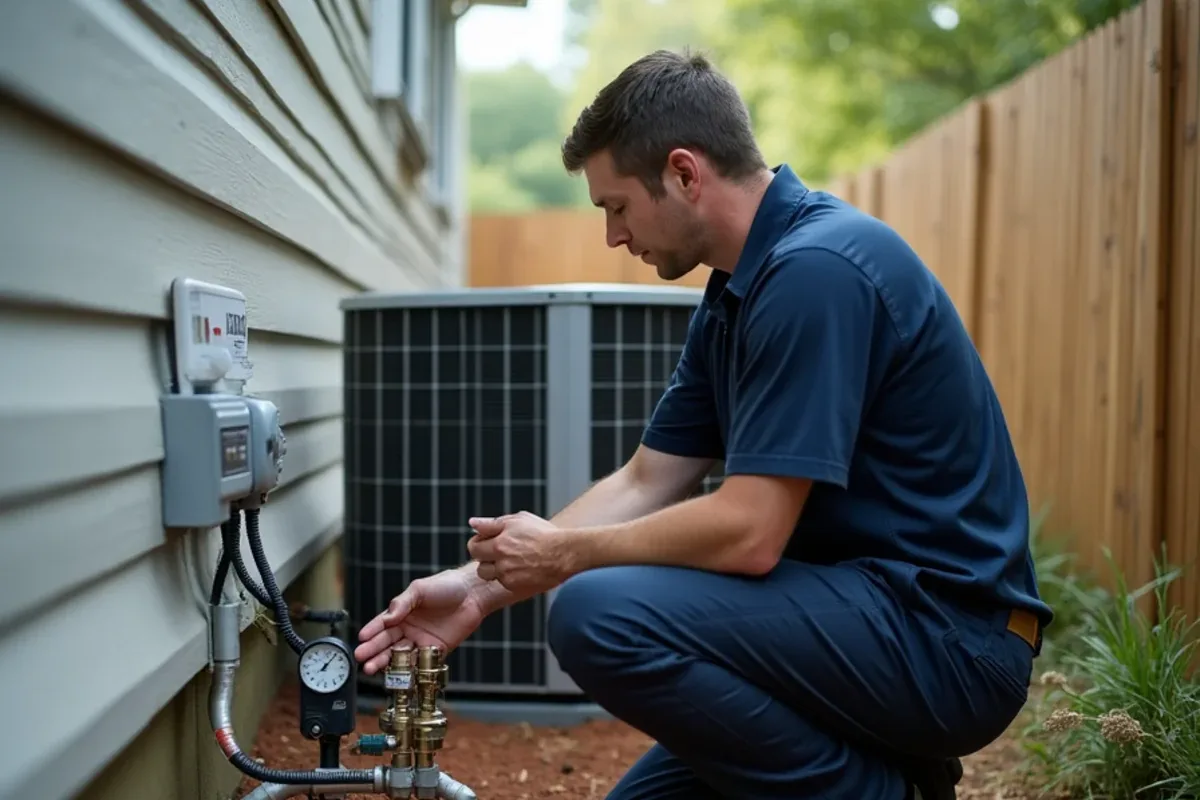
Every visit follows the same order, so you know what is happening and nothing gets replaced on a guess.
- 1You call. A live person answers (321) 478-0693, asks what the system is doing, confirms your address and tells you honestly what timing to expect from the nearest available technician.
- 2Diagnosis by measurement. Capacitor values, voltage and amps, refrigerant pressures, temperature split, filter and condensate drain.
- 3Price in writing. You hear what failed in plain language and get the price before any repair. If the system is not worth fixing, you hear that too.
- 4Repair. Only the approved work is done, with parts matched to your equipment.
- 5Test. The system runs under load while readings are checked again, and you see the old part.
Repair or replace: how to decide on an older unit
Age alone does not settle it: a 16-year-old condenser with a failed capacitor is usually worth fixing, while a 12-year-old one with a leaking coil may not be. Central air conditioners here often last around 12 to 15 years.
| Situation | Usually leans toward |
|---|---|
| Capacitor, contactor or fan motor, any age | Repair |
| Small leak at a valve or joint on an R-410A system | Repair |
| Leaking evaporator coil on an R-22 system | Replacement |
| Failed compressor on a system past 12 years | Replacement |
| Third significant repair in two summers | Price a replacement before approving |
| House never cooled evenly, even when new | Check ducts and sizing first |
When replacement is the better call, HVAC installation and replacement covers load calculations, SEER2 ratings and the newer refrigerants. If your home has a heat pump instead of a separate furnace, see heat pump repair and replacement too, since that outdoor unit heats as well as cools.
What every AC repair visit includes
- A live answer and honest timing before dispatch
- Diagnosis from electrical, refrigerant and airflow readings
- A plain-language explanation of what failed and why
- A written price before any repair starts
- Filter, condensate drain and float switch checked on every call
- A run test under load before the technician leaves
- A straight answer when an R-22 unit is not worth fixing
Why choose Littleton Premier Heating & Air for ac repair
A person answers, day or night
(321) 478-0693 reaches a live dispatcher 24/7, with honest timing instead of a promised arrival window.
Licensed and insured technicians
Every HVAC technician we send is licensed and insured in North Carolina. Most residential work falls under the H-3 classification, and you can check any contractor on the board's license lookup at nclicensing.org.
Price before work
Nothing is replaced until you approve a written price.
Used to Matthews houses
Attic air handlers, crawl space ducts on red clay and 1990s R-22 condensers are routine work here.
What affects the cost of an AC repair (and how a tune-up prevents one)
The same no-cool symptom can be a small electrical part or a compressor, so the technician diagnoses first and writes the price down before any work. A spring AC tune-up prevents many of these calls by catching a weak capacitor, a slow drain or a pollen-matted coil while the fix is small.
- Which part failed. Capacitors, contactors and drain clears sit at the low end; compressors and evaporator coils at the high end.
- Refrigerant type and amount. R-22 is scarce, and any recharge should follow a leak repair, not replace one.
- Where the leak is. A Schrader valve core is a quick fix; a pinhole in an evaporator coil may mean replacing the coil.
- Access. An attic air handler in August, or a crawl space unit behind a tight access door, takes longer than a closet system.
- Parts availability. Common capacitors and contactors ride on the truck; brand-specific boards and motors may need ordering.
- Timing. Any after-hours or holiday rate is stated on the call before dispatch.
We don't publish prices we can't stand behind: you hear the price for your system, from the technician who diagnosed it, before any work starts. More detail: How Much Does AC Repair Cost in Matthews, NC?
AC Repair around Matthews, NC
Most AC repair calls come from the subdivisions off NC 51 and John Street, the streets around Sardis Plantation and Brightmoor, and the townhomes near historic downtown. The same dispatch handles AC repair in Stallings across the Union County line, older crawl space homes that need air conditioning repair in Mint Hill, and the 2000s subdivisions behind most calls for AC service in Indian Trail. Every town we reach is listed on our HVAC service areas page.