
Heating Troubleshooting
Furnace Not Igniting on the First Cold Night: What to Check
By Littleton Premier Heating & AirUpdated 7 min read
The short answer
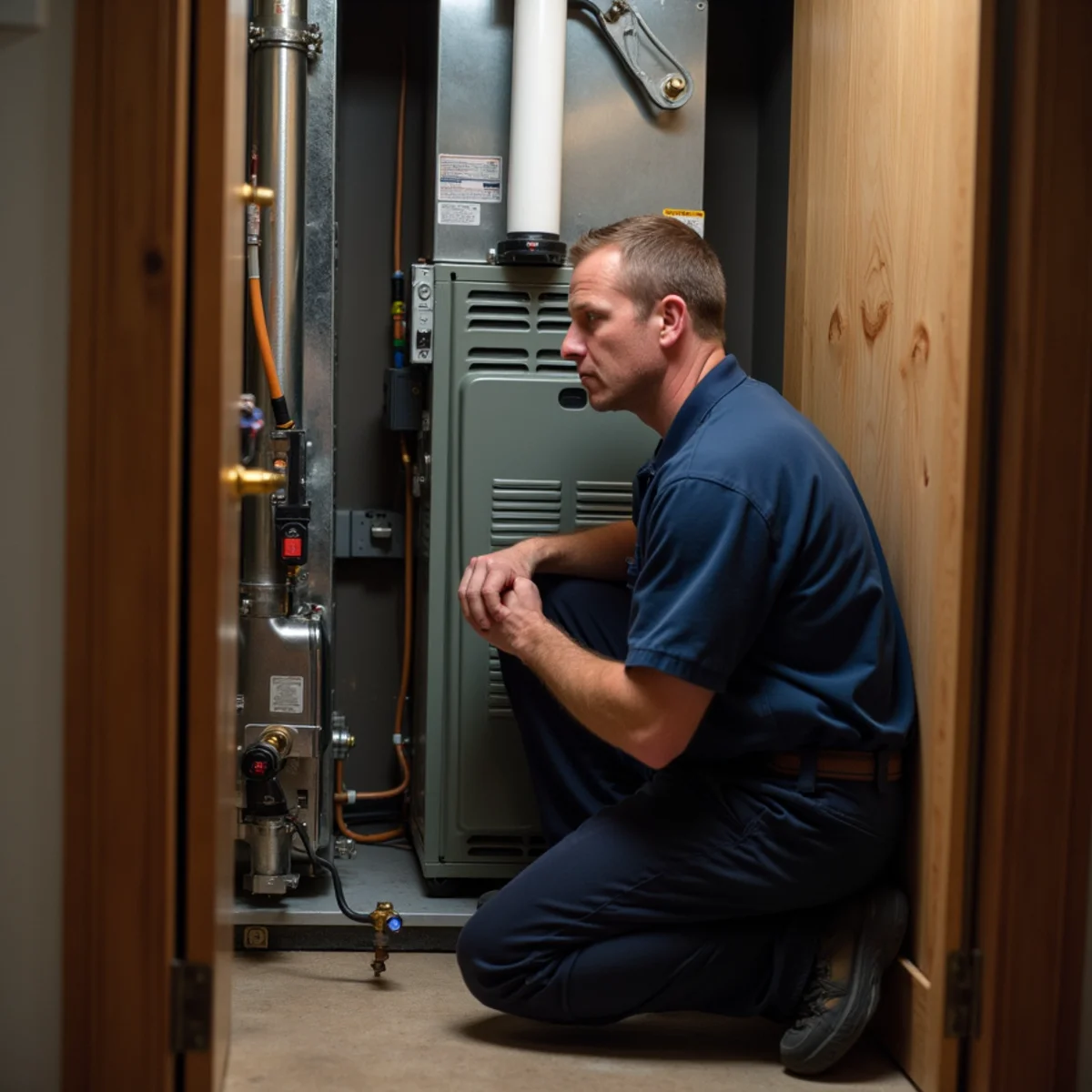
When a furnace will not light on the first cold night, check the thermostat (Heat, above room temperature), the service switch and breaker, the filter, the gas valve and the blower door. Then read the blinking light on the control board. If you smell gas, leave the house and call Piedmont Natural Gas or 911 from outside.
If You Smell Gas, Stop Here
A rotten-egg or sulfur smell is not a furnace problem to troubleshoot. Get everyone out of the house first. Do not flip switches, adjust the thermostat, start a car in an attached garage or use a phone inside. Once you are outside and away from the house, call Piedmont Natural Gas (or your gas supplier, such as the City of Monroe if your gas comes from the city system) and 911. Call us after the gas utility says the home is safe.
The same rule applies to a carbon monoxide alarm. Leave first, call 911 from outside, and let the fire department clear the house before anyone looks at the furnace.
How a Modern Gas Furnace Lights, Step by Step
Knowing the order tells you where the sequence stops. Stand near the furnace while someone raises the thermostat and listen.
- 1Call for heat. The thermostat sends a 24-volt signal to the control board.
- 2Inducer motor starts. A small fan hums to life and pulls air through the heat exchanger and out the vent.
- 3Pressure switch closes. It proves the vent is drawing properly. No proof, no ignition.
- 4Igniter glows. A hot surface igniter turns bright orange for several seconds up to roughly half a minute.
- 5Gas valve opens and burners light. You hear a soft whoosh.
- 6Flame sensor proves the flame. If it cannot confirm a flame within a few seconds, the board closes the gas valve.
- 7Blower starts. Warm air reaches the vents a little later.
Many boards make about three attempts, then lock out for roughly an hour before trying again. That is why a furnace can seem dead, then suddenly fire up by itself later.
Safe Checks You Can Make Before You Call
- 1Thermostat. Confirm it says Heat and the setpoint is a few degrees above the room. Replace weak batteries.
- 2Power. The furnace service switch looks like a light switch on or near the cabinet and gets flipped off by mistake. Check it and the breaker.
- 3Blower door. A door switch cuts power when the lower panel is loose. Press the panel firmly into place.
- 4Filter. A filter packed with summer dust and pine pollen can overheat the furnace and trip the limit switch.
- 5Gas valve at the unit. The manual shutoff on the gas pipe beside the furnace is open when its handle runs in line with the pipe. If it was closed for summer work and you know why, opening it is reasonable. If there is a tag on it, or you do not know why it is closed, leave it and call.
- 6Outside vent pipes. On a high-efficiency furnace, look at the two white PVC pipes where they leave the house. Leaves, a wasp nest or ice after a winter storm can block them.
Reset the furnace only once: switch the service switch off for about 30 seconds, then back on. If it locks out again, something is failing, and repeated resets on a flame rollout or limit problem can make it worse.
Read the Blinking Light Before You Cut the Power
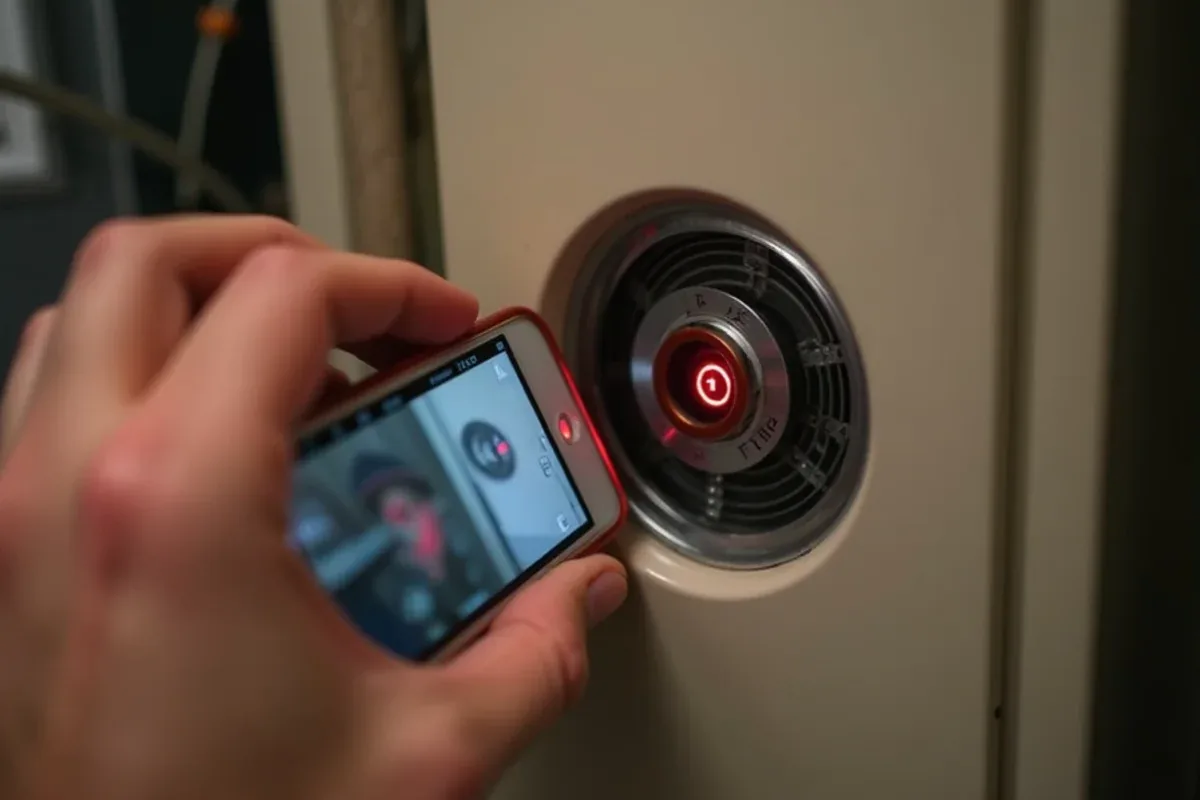
Most furnaces built since the 1990s have an LED on the control board, visible through a small window in the lower door. It flashes a pattern, and the legend is printed on a sticker inside the door or in the owner manual.
Count the flashes and photograph the light before you turn off the power, because cutting power usually clears the code. A code such as "pressure switch open" or "ignition lockout" tells the technician where to start.
The Parts That Usually Fail
| What you see or hear | Likely cause | Who handles it |
|---|---|---|
| Inducer runs, igniter never glows | Cracked hot surface igniter or a board fault | Technician |
| Burners light, then go out after a few seconds | Dirty or weak flame sensor, or a grounding problem | Technician |
| Inducer runs, nothing else happens | Pressure switch not closing: blocked vent, cracked hose, water in the hose or a weak inducer | Technician, after you check the outside pipes |
| Burners light, run a few minutes, then shut off while the fan keeps running | Limit switch tripping from restricted airflow | Change the filter first, then call |
| Nothing at all, blank thermostat | Power, door switch, blown board fuse or transformer | Check switch and breaker, then call |
Igniter and flame sensor
Hot surface igniters are brittle, and a hairline crack stops one from glowing. The flame sensor is a thin rod in the burner flame. Over a season it collects a film that weakens its signal, so the board shuts the gas off. A technician cleans it, measures the signal and checks the ground.
Igniter glows but the burners never light
If you can see the igniter glow orange through the sight glass and then the furnace gives up, the board either never opened the gas valve or gas never arrived. Two quick, safe questions narrow it down: does the gas stove or gas water heater work right now, and has anyone recently worked on the gas line or the meter? If no gas appliance works, call your gas supplier, because the problem is upstream of the furnace. If they all work, the cause is usually the gas valve, its wiring, or a pressure switch that never proved the vent, and that is a technician job. Do not cycle the furnace over and over hoping it catches.
Pressure switch, inducer and limit
The pressure switch is often blamed and rarely the real culprit, so a technician tests the vent draft first. A limit that trips repeatedly is the furnace protecting itself from overheating, usually from a clogged filter, closed registers or a dirty AC coil sitting on top of the furnace.
High-Efficiency Furnaces and the Condensate Trap
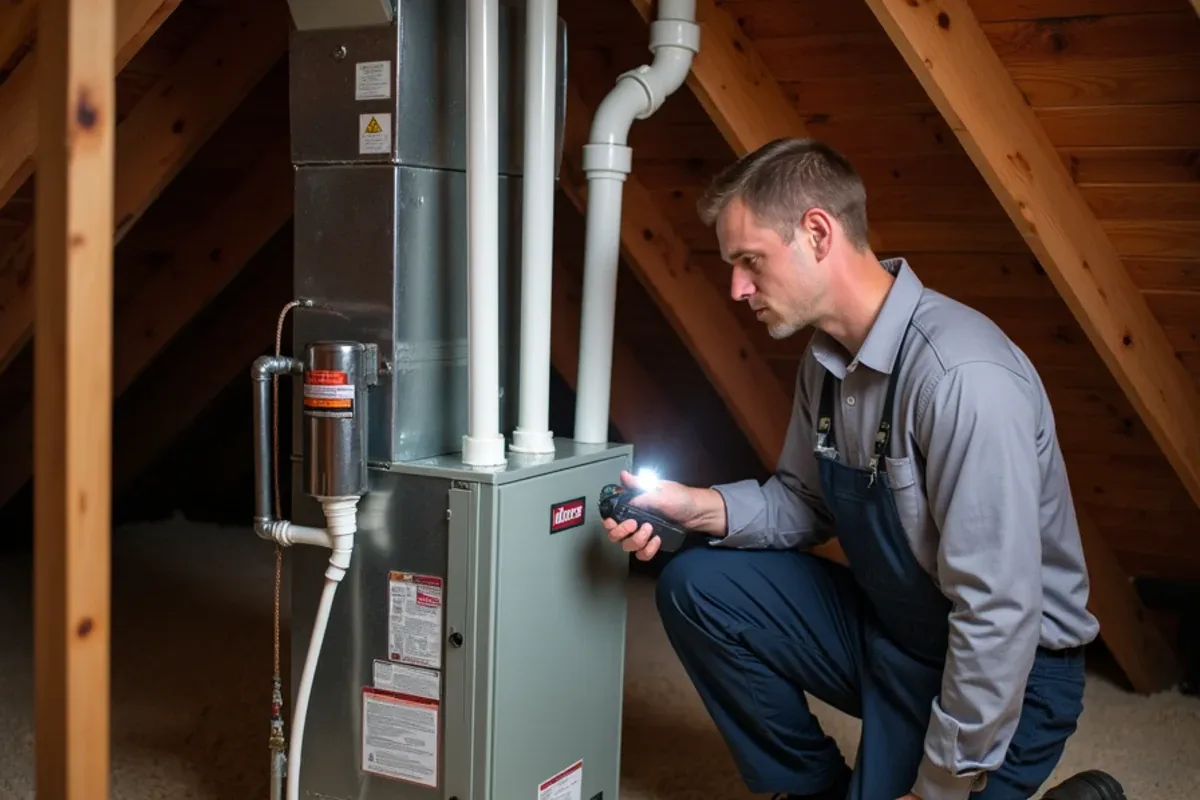
A 90 percent or higher furnace makes water as it burns, and that water drains through a plastic trap. Over the summer, sludge and algae build up in it. On the first cold night, water backs into the pressure switch tubing, the switch never closes and the furnace will not light. You may hear gurgling.
In many 2000s homes around Matthews and Monroe the furnace sits in the attic, where the condensate line can freeze in a hard cold snap. Mention any water in the pan under the furnace on the call.
Why the First Cold Night Exposes These Faults Around Matthews and Monroe
Piedmont winters are mild enough that a furnace can sit unused from March to November. In dual-fuel homes the heat pump carries the load until it gets truly cold, so the first frosty night may be the furnace's first run in eight months, after a humid summer and a hot attic have worked on its sensors and board. In the older homes near Monroe's historic downtown and in parts of Mint Hill, furnaces are older and some still sit in crawl spaces. For more on that housing, see our page on furnace and AC repair in Monroe, NC.
If your heat pump is the one acting up instead, our guide to a heat pump blowing cold air in winter covers defrost and auxiliary heat. A fall check from our spring and fall HVAC maintenance checklist catches most of these faults before the cold arrives.
The Bottom Line When Your Furnace Will Not Light
Check the thermostat, power, door, filter, gas valve and vent pipes, then photograph the error code and reset once. If it locks out again, call. Our furnace and heating repair service diagnoses the igniter, flame sensor, pressure switch and limit circuit and gives you a price before any work starts. On a freezing night with children, older relatives or pets in the house, 24/7 emergency HVAC repair is a phone call away at (321) 478-0693.
From the job site
What the Control Board Says Before the Door Comes Off
On first-cold-night calls around Matthews and Union County, the fault code usually narrows things to one circuit before a screw is removed. A photo of the blinking light, plus a note on what the homeowner heard, often points straight at the cause.
The furnaces that surprise people are the high-efficiency units with a clogged condensate trap. They look like a failed pressure switch, and swapping the switch fixes nothing. Clearing the trap and flushing the drain does. A technician who checks the drain and vent before replacing parts saves a part you did not need.
- Photograph the blinking light and the data plate before you call.
- Note whether the inducer runs, the igniter glows and the burners light.
- Replace the filter before the first cold night, not after the furnace locks out.
Related questions
Why does my furnace click and hum but never light?
Why does my furnace light and then shut off after a few seconds?
Is it safe to keep resetting my furnace?
Can a technician come out at night if my furnace will not ignite?
Written by the Littleton Premier Heating & Air team for homeowners in Matthews and nearby communities. General information, not a diagnosis or engineering advice: leave refrigerant, electrical and gas work to a licensed HVAC technician, who has the final word on your system. Every HVAC technician we send is licensed and insured in North Carolina. Last reviewed October 2026.